
From Hot Spot to Hot Product: My Journey to Optimizing Turbocharger Turbine Housings
Discover how I developed a modular TMF life calculation workflow that works seamlessly with ABAQUS and ANSYS, reducing gas stand tests and cutting costs while ensuring faster, more flexible geometry optimization.
S.Puchhala
2/11/2025
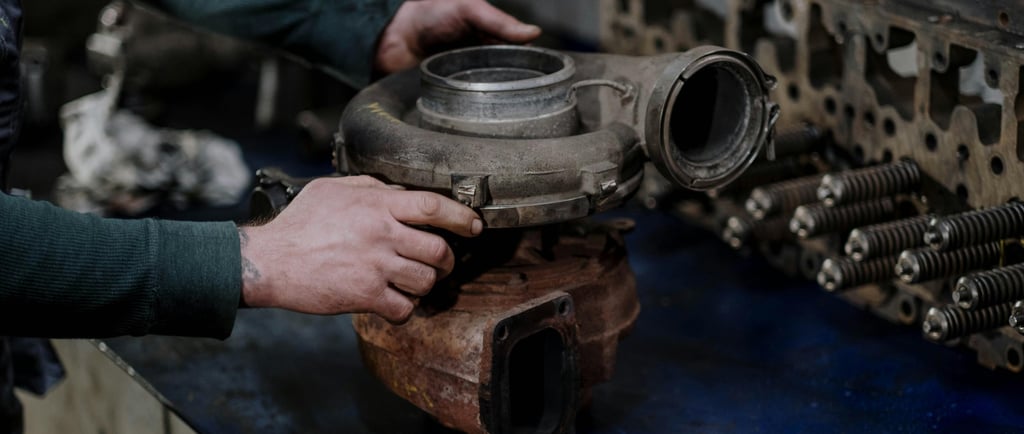
Turbocharger turbine housings (TH) operate under extreme conditions—high temperatures, mechanical stress, and thermal-mechanical fatigue. Traditional gas stand tests were time-consuming and expensive, making the design process slow and costly. A more efficient, accurate, and flexible solution was needed to optimize performance while reducing costs.
Recognizing these challenges, I created a flexible simulation workflow for TMF (Thermo-Mechanical Fatigue) life calculations. The key breakthrough? A system that seamlessly integrates with both ABAQUS and ANSYS, using custom-built damage libraries—making it easy to use across all BorgWarner locations.
By integrating explicit material characterization and numerical methods tailored to gas stand tests, the workflow provided rapid and accurate life predictions. This flexibility allowed for quick adjustments when testing new materials or making new designs and design changes.
The impact was immediate and measurable:
✔ Faster Development Cycles – Engineers could make real-time optimizations without waiting for extensive physical tests.
✔ Cost Savings – Significantly fewer gas stand tests were needed, reducing testing costs and time.
✔ Global Standardization – The workflow ensured consistent TH TMF life calculations across all BorgWarner locations.
✔ Enhanced Product Reliability – Optimized material selection and precise calculations improved durability.
By continuously refining TMF simulations, we can further push the boundaries of turbocharger efficiency and durability.
If you’re working on similar challenges in thermal-mechanical fatigue analysis, material characterization, or numerical modeling, let’s connect and share insights!